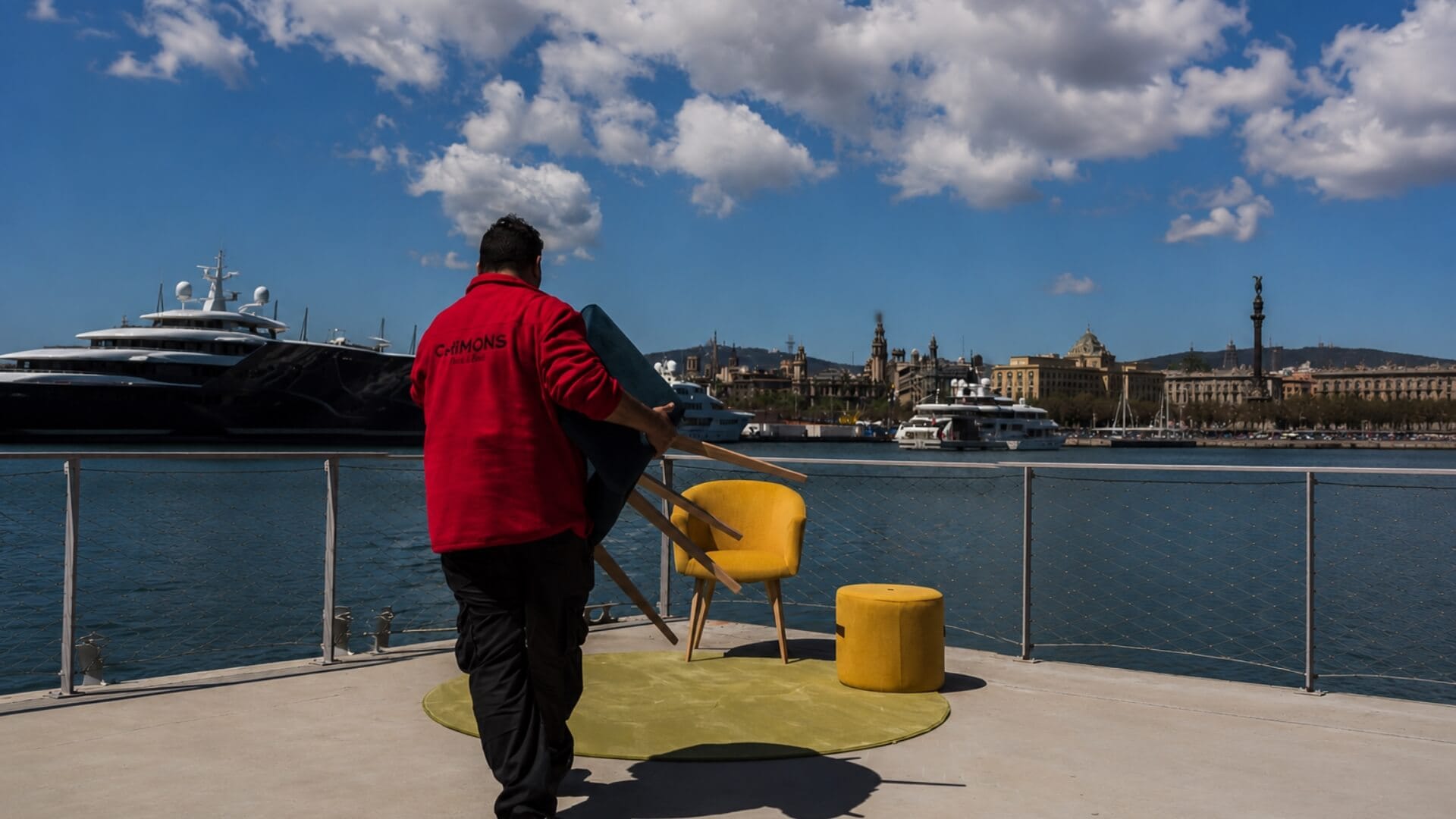
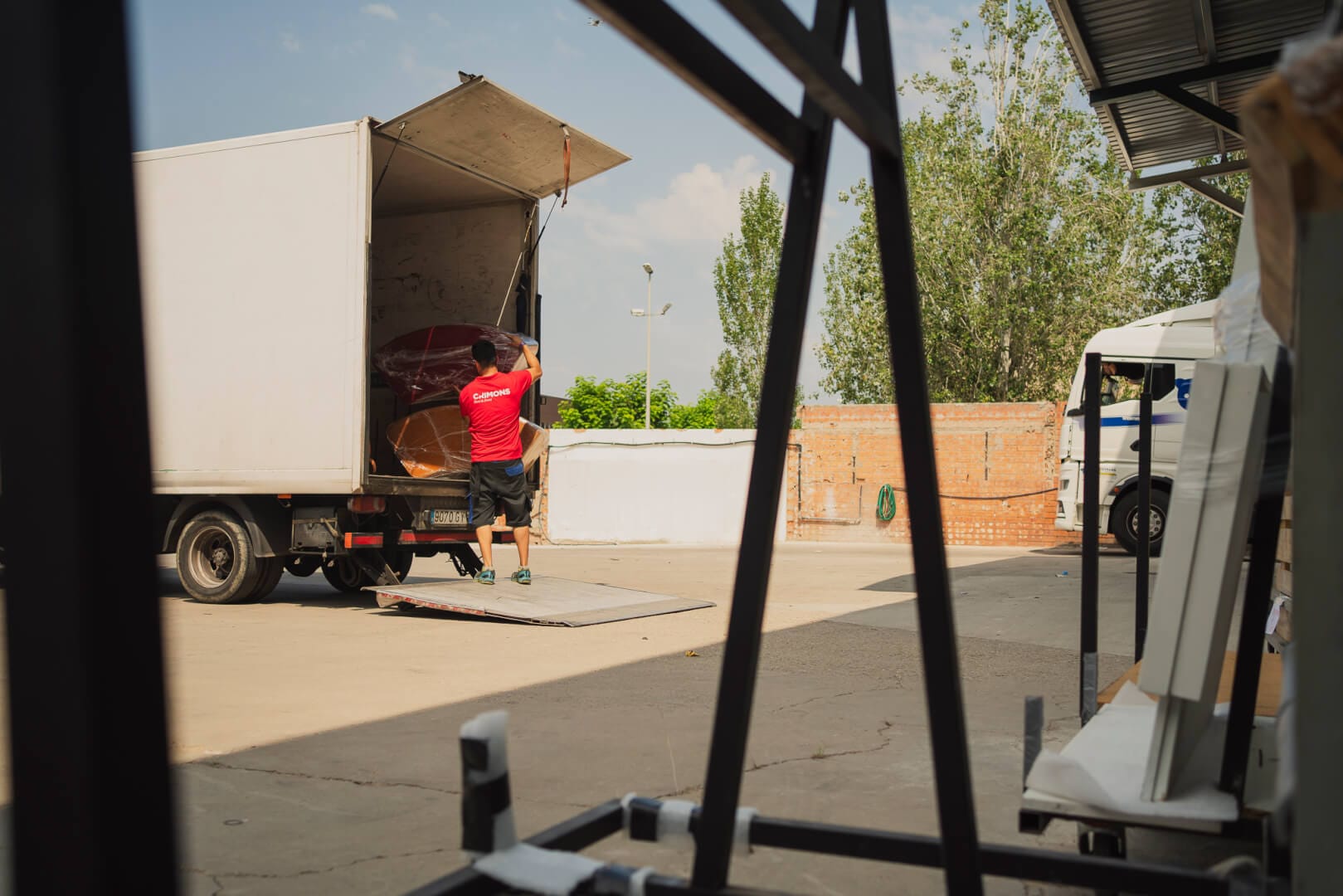
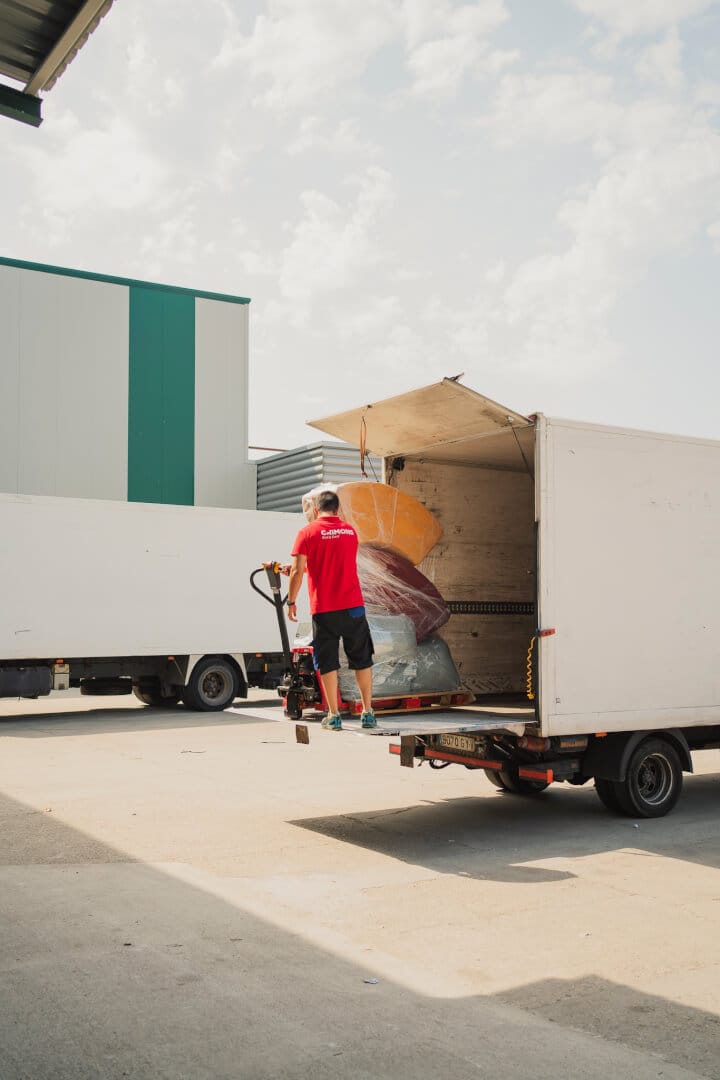
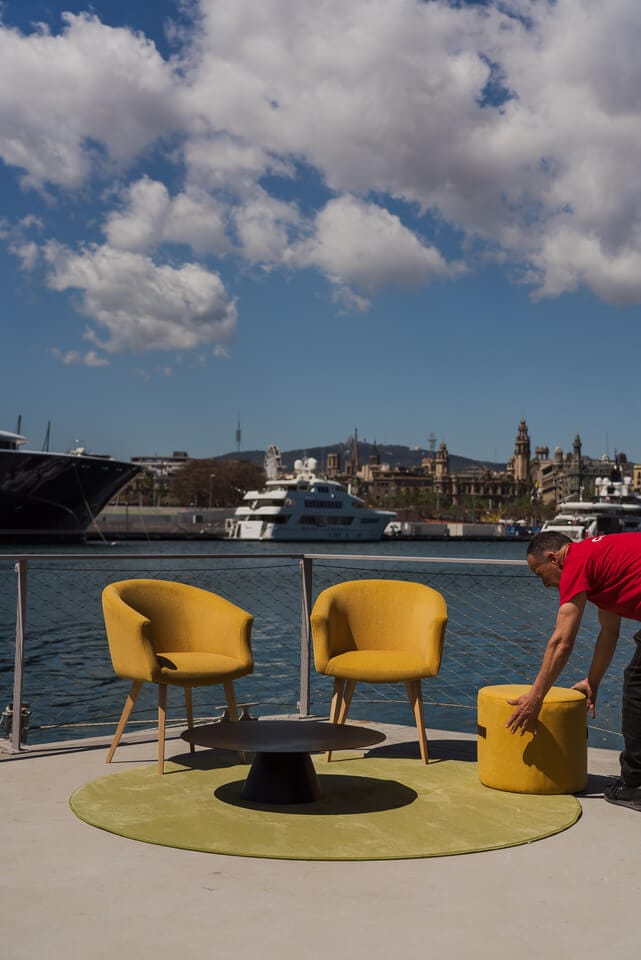
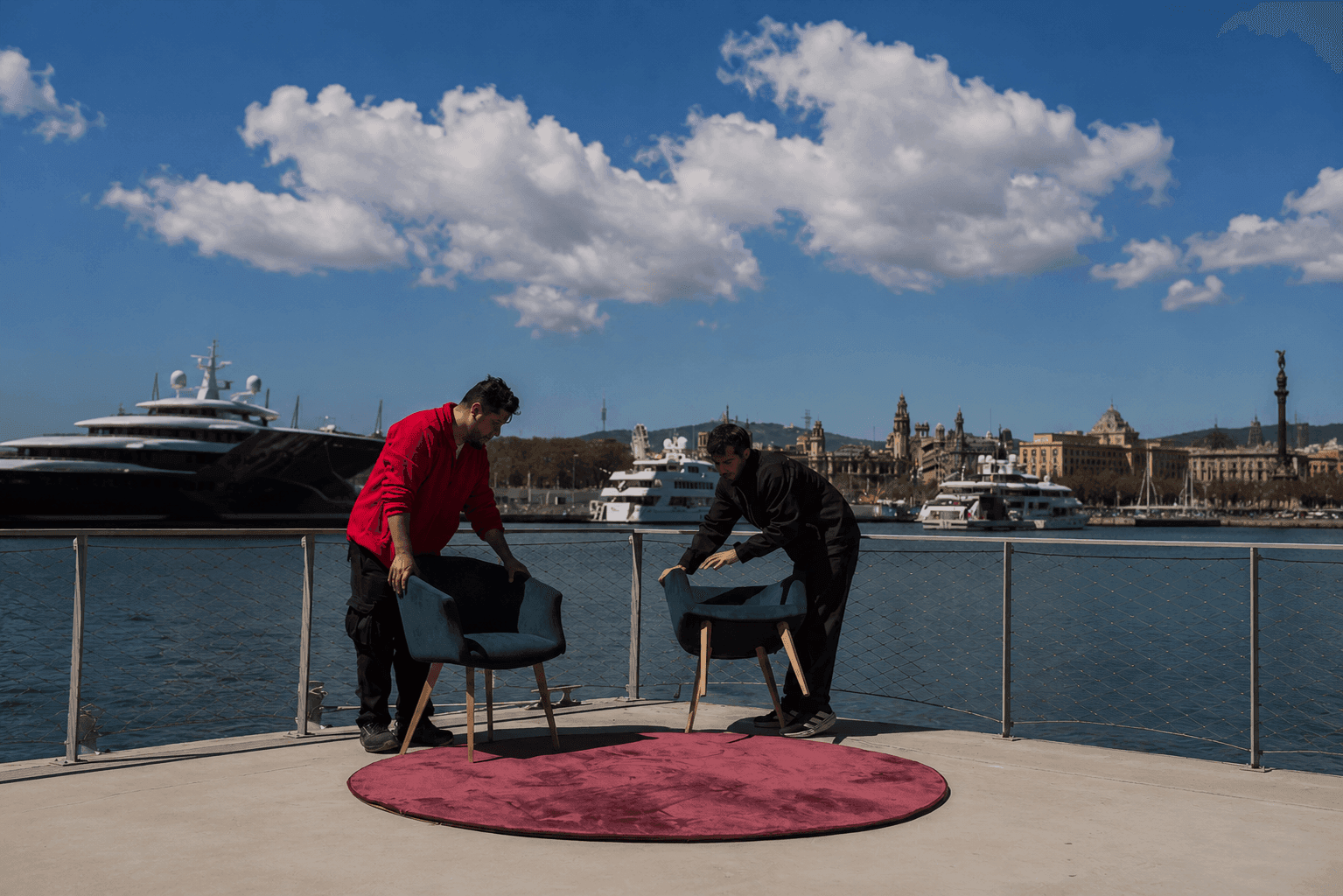
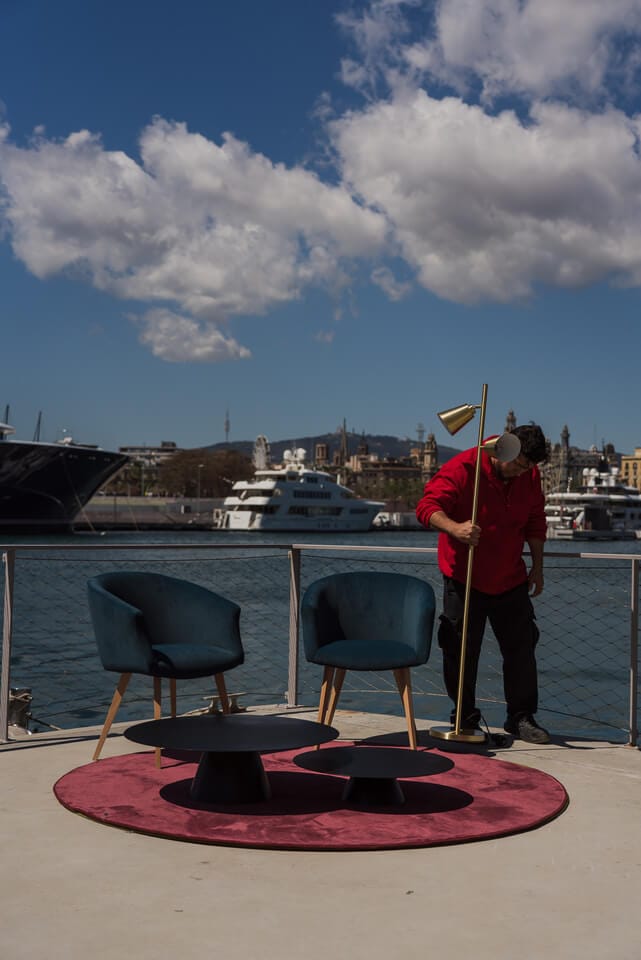
The challenges behind every installation: everything that happens behind the scenes
When furniture arrives at an event, everything seems simple. Every piece is in its place, the space begins to take shape, and the setup moves forward. However, behind that result lies a planning and coordination process that begins long before.
From the moment a client confirms their order, the Crimons team sets in motion a workflow that includes preparing the furniture in the warehouse, inspecting, cleaning, and packing it, organising transportation, and finally installing it at the venue. It is a process where every detail matters, and every event presents new challenges that require adaptability and careful planning.
Some of the challenges our team faces every day at different events:
Every kilometre matters: long-distance deliveries
Not every event takes place close to our facilities. In many cases, our team travels hundreds of kilometres to carry out an installation.
These distances require much more precise logistical planning, where transportation, loading and unloading times, and team coordination are essential to ensure the furniture arrives on time and the installation can begin as scheduled.
Unloading challenges
Arriving at the venue does not always mean the setup can begin immediately.
Some venues have limited access, loading and unloading areas located far from the event space, or restricted delivery time slots. In these situations, moving the furniture requires additional time and a different level of organisation to ensure the installation is completed within the agreed deadlines.
Every venue has its own particular conditions, and the team must adapt without compromising the event schedule.
Time constraints: adapting to demanding schedules
Event logistics rarely follow a conventional working schedule.
Early morning installations, overnight dismantling, and deliveries outside standard business hours are all part of the industry’s daily routine. In addition, some projects, due to their size or complexity, require installation days that are significantly longer than usual.
Flexibility and strong team coordination are essential to meet every schedule successfully.
Simultaneous installations
At certain times of the year, it is common for several events to take place on the same date—or even at the same time.
This requires coordinating multiple installation teams, vehicles, and transport routes so that all projects progress simultaneously, even when they are in different locations.
Careful advance planning makes it possible to optimise resources while ensuring every client receives the same high standard of service, regardless of workload.
Weather-related challenges
For outdoor events, there is one factor that cannot always be predicted: the weather.
Rain, wind, or sudden temperature changes may require modifying the planned layout, replacing certain furniture items, or arranging additional deliveries and collections to adapt the installation to the new conditions.
The ability to react quickly is essential to provide effective solutions and maintain the experience planned for attendees.
Behind every installation is a process of planning, coordination, and adaptability that begins long before the first guest arrives.
Every event presents different challenges, but they all share the same objective: ensuring the space is ready at the right time so the client can simply focus on enjoying the final result.
Because, although it often goes unnoticed, the success of an event also depends on everything that happens before it begins.
Combine it with
See all
What does decorating with centerpieces contribute to your event?
Create functional and stylish spaces to make your sporting event a complete success.
Going to Artíes for a wedding
A pallet event
Corporate Event Spaces in Madrid

Recycle your style!

Crimons with fashion
It is not another gala dinner